
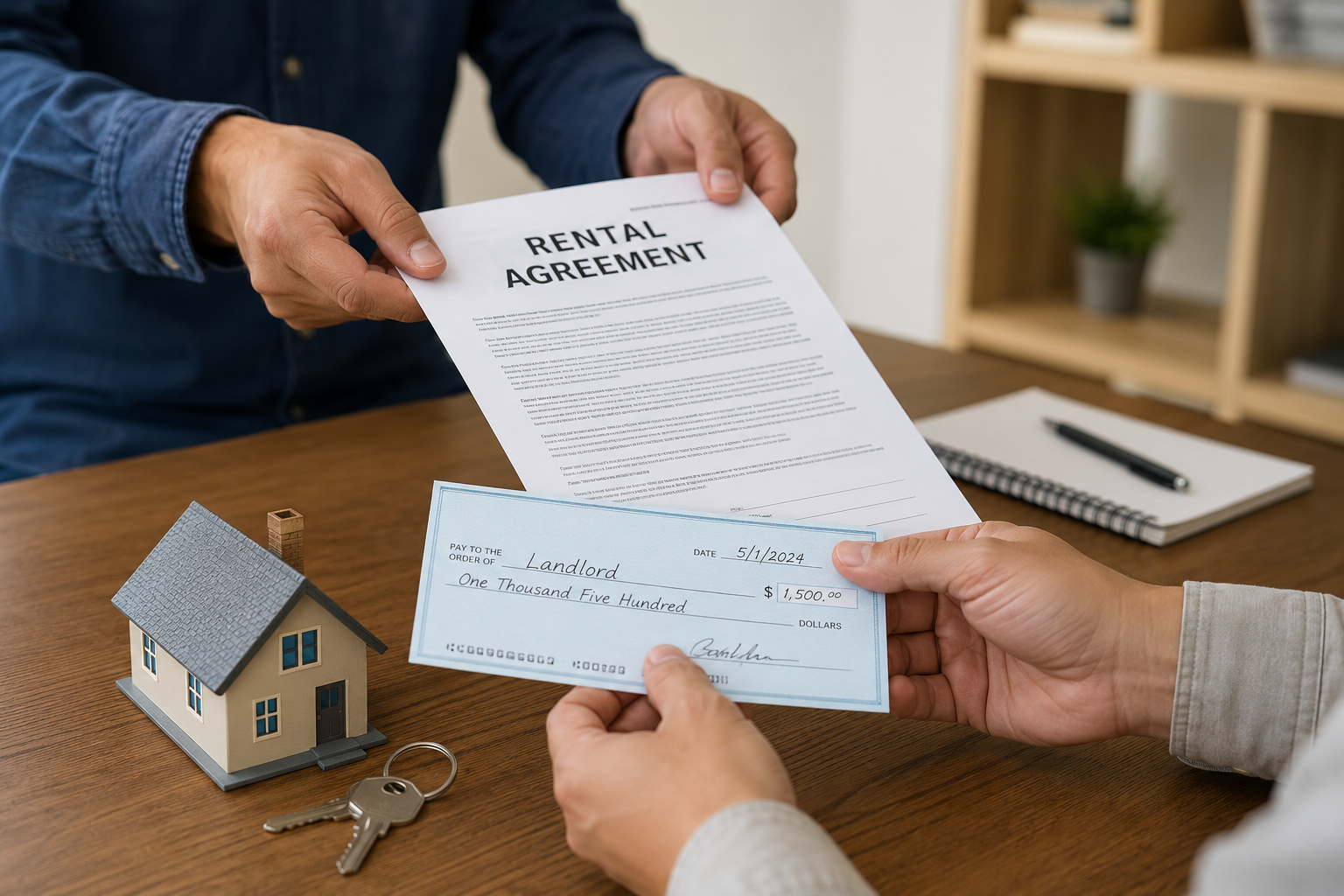
Mankato says it wants more affordable housing.
But there is an uncomfortable question City Hall needs to answer:
How much is Mankato's own rental regulatory system contributing to the cost of renting a home?
Nobody is arguing that landlords should be allowed to rent dangerous buildings. Renters deserve working heat, safe electrical systems, functioning smoke alarms, adequate sanitation, and structurally sound homes.
Those are legitimate public-safety responsibilities.
But Mankato's rental system goes considerably beyond enforcing basic health and safety standards. Rental housing is subject to licensing, zoning approval, inspections, occupancy restrictions, parking requirements, administrative procedures, and other conditions that determine whether a property can legally be rented at all.
Every one of those requirements should have to answer the same question:
Does the public benefit justify the cost it ultimately places on Mankato's housing market?
What Mankato Actually Requires
This isn't a hypothetical argument about regulation in some other city.
Mankato's own current rental-zoning guidance says a rental application will not even be processed until the city receives a complete application, payment, a site plan, and floor plans drawn to scale.
Zoning requirements must be satisfied before the housing inspection occurs. And the city explicitly states that if required off-street parking cannot be provided, a rental license will not be issued and the inspection process stops.
The property cannot be occupied as a rental until the application has been approved.
That matters because the cost of regulation is not limited to a check written to City Hall.
It can include designing plans, administrative work, preparing a property for inspection, correcting deficiencies, constructing parking, paving parking areas, losing rental income while approval is pending, and—in some cases—losing the ability to rent a property altogether.
Mankato also restricts who can occupy rental housing
In Mankato's R-1 and R-2 low-density districts, rental occupancy is generally limited to two unrelated individuals or a family.
In R-3, R-4 and Office Residential districts, the limit is generally five individuals or a family.
That may sound like an abstract zoning issue. Economically, it matters.
Imagine a house physically capable of safely accommodating three or four adults. If zoning allows only two unrelated tenants, the cost of that house must be divided among fewer renters.
A $1,800 monthly property cost divided among three renters represents $600 per renter.
Divide it between two renters, and it becomes $900 each.
The city is not literally setting those rents—but regulation can determine how many people are permitted to share the cost of housing.
Parking Requirements Can Become Housing Requirements
Mankato also ties rental eligibility to off-street parking.
For rentals in R-1 and R-2 districts, the city generally requires two off-street parking stalls per unit, and those spaces must be paved with asphalt or concrete.
For some one- and two-family rentals in R-3, R-4 and Office Residential districts, parking requirements can depend upon bedroom size, subject to minimum and maximum requirements. Multifamily properties generally require two off-street stalls per unit under the city's rental-zoning guidance.
And this is not merely a recommendation.
Mankato says:
If off-street parking standards cannot be met, a rental license will not be issued.
That means a parking requirement can effectively become a housing-supply restriction.
An otherwise habitable home can be prevented from entering the rental market because the lot cannot accommodate the required parking.
That deserves serious scrutiny in a city concerned about housing affordability.
A bedroom shelters a person.
A parking stall shelters a car.
City policy should not make the second more important than the first.
Licensing Costs Money Too
Mankato's licensing system also creates direct financial costs.
The city's current rental-license page confirms that when an existing licensed rental property changes ownership, the license must be transferred. The application and $15 transfer fee must be submitted within 30 days, and outstanding fees and violations must be cleared before the license is issued. Depending on inspection history, another inspection may also be required.
The city's last readily available comprehensive fee schedule I located listed rental licensing at $45 per year per unit for the first six units and $12 for each unit in excess of six. Those figures should be checked against the city's latest internal fee schedule before publication as current 2026 rates.
Those fees alone aren't going to explain Mankato's rent levels.
That is not the strongest argument.
The more important issue is the cumulative cost of the regulatory system:
licensing + inspections + compliance work + parking improvements + administrative time + delays + occupancy restrictions + limits on where rental housing can exist.
Small costs become meaningful when they accumulate across thousands of housing units and repeat year after year.
What Economic Research Says
This isn't simply landlord speculation.
There is a substantial economic literature examining what happens when local regulation makes housing more difficult to build or provide.
Economists John Quigley and Steven Raphael examined housing affordability and concluded that land-use regulation and zoning are among the factors influencing housing costs and rent burdens. Their work was published in the peer-reviewed Journal of Economic Perspectives.¹
In a subsequent American Economic Review paper, Quigley and Raphael specifically examined regulation and California housing costs, documenting a relationship between regulatory environments and higher housing costs.²
Those studies do not prove that every Mankato regulation raises rent by a particular number of dollars.
They demonstrate the larger economic mechanism:
When regulation restricts housing supply or increases the cost of producing housing, housing becomes more expensive than it otherwise would be.
More Regulation Can Mean Less Housing
One particularly useful peer-reviewed study comes from economist Kristoffer Jackson.
Using data from California cities from 1970 through 1995, Jackson examined how additional land-use regulations affected residential development.
He found that implementation of an additional regulation was associated with approximately a 4% reduction in residential permits, affecting both single-family and multifamily construction.
The study was published in the Journal of Urban Economics.³
That finding is important for Mankato because affordability isn't only about what today's landlord charges.
It is also about the apartment, duplex, converted house, accessory unit, or small multifamily development that never gets created.
Every project that becomes financially impractical because of regulatory barriers represents housing that never competes for tenants.
What Happens When Restrictions Are Relaxed?
Recent peer-reviewed research provides evidence from the opposite direction.
Simon Büchler and Elena Lutz examined reforms that increased allowable housing density. Their 2024 study in the Journal of Urban Economics found that upzoning increased housing units and residential floor space by approximately 9% over the following five to ten years.
The authors concluded that upzoning can be a viable way to increase housing affordability, although the effects take time and depend heavily upon policy design.⁴
That should matter to Mankato.
Housing affordability isn't created by declaring housing affordable.
It comes, in large part, from allowing enough housing to be built and used so renters actually have choices.
The Evidence Is Not an Excuse to Abolish Safety Standards
There is an important distinction that responsible reform should recognize.
Not every regulation is harmful.
Research on zoning does not prove that eliminating smoke-detector requirements will lower rent or that dangerous buildings should remain occupied.
And not every deregulation produces an immediate reduction in rents.
A 2009 peer-reviewed study by Jenny Schuetz found that more restrictive zoning in Massachusetts communities was associated with significantly fewer multifamily building permits, although the study found only weak evidence of a direct effect on rents.
That nuance is important.⁵
Housing markets are complicated.
Interest rates, construction costs, wages, property taxes, insurance, population growth, student demand, vacancy rates, and many other factors affect rents.
So the honest claim isn't:
“Mankato's rental department caused high rents.”
The defensible claim is:
Mankato has policies that increase the cost of providing rental housing and restrict how much rental housing can be supplied—and economic research tells us those are exactly the kinds of barriers that can make housing less affordable.
That should be enough to demand reform.
Small Landlords Pay a Disproportionate Price
The regulatory burden is particularly important for smaller landlords.
A company owning 500 apartments can spread administrative expenses across 500 units.
Someone renting one duplex cannot.
The same inspection appointment, licensing process, paperwork, compliance research and management time represents a much larger cost per unit for a person owning two units than for a corporation owning hundreds.
That can have an unintended consequence.
Regulations supposedly directed at “landlords” may be easiest for the largest landlords to absorb.
The local resident with one rental house, the retiree with a duplex, or the person considering converting unused space into another apartment faces those costs on a much smaller economic base.
Drive enough small operators out of the market and the result isn't necessarily better housing.
It can mean less competition and greater concentration of rental ownership.
Mankato Should Ask Whether Every Rule Is Worth Its Cost
The answer isn't eliminating rental standards.
The answer is separating regulations that genuinely protect renters from rules whose costs outweigh their benefits.
Mankato should conduct a complete review of its rental ordinance and licensing system.
For every requirement, the City Council should demand answers to five questions:
What measurable health, safety, or neighborhood problem does this rule address?
What does compliance cost property owners?
How many potential rental units does the rule prevent or discourage?
Is there a less expensive way to accomplish the same public purpose?
Does the evidence show the regulation actually works?
If City Hall cannot answer those questions, the rule should not simply continue because “that's how we've always done it.”
Start With Parking and Occupancy
Two areas deserve immediate scrutiny.
1. Parking mandates
Mankato should review whether every rental property truly needs two dedicated off-street parking spaces per unit and whether parking requirements should prevent otherwise legal housing from being rented.
Where street parking or other transportation options are available, rigid parking minimums can use land that could otherwise accommodate housing—or make conversion of existing housing impossible.
2. Unrelated-person occupancy limits
Mankato should reconsider rules that treat a family of four differently from three unrelated adults living in the same house.
Health and safety regulations should be based primarily on objective factors such as bedroom size, fire safety, sanitation and building capacity—not simply whether the occupants are related to each other.
If a home can safely accommodate three adults, City Hall should have a compelling reason before prohibiting them from sharing it.
Reward Good Property Owners Instead of Treating Everyone the Same
Mankato could also move toward risk-based rental regulation.
A property with years of clean inspections and no serious complaints should not necessarily receive the same level of regulatory attention as a property with repeated health and safety violations.
The city could use:
longer inspection intervals for consistently compliant properties;
simplified license renewals;
targeted inspections based on complaints and documented risk;
rapid enforcement against genuinely dangerous properties;
and fewer procedural barriers for responsible landlords adding housing.
That would allow inspectors to spend more time dealing with problem properties while reducing costs for people already following the rules.
Measure the Cost of the Department
Mankato should also publish an annual Rental Regulation Cost and Outcomes Report.
Residents should be able to see:
how much the licensing and inspection program costs;
how much revenue it collects;
how many inspections are conducted;
how many serious safety violations are discovered;
how many licenses are denied because of parking or zoning rather than building safety;
how long approval takes;
how many potential rental units are rejected;
and what measurable improvements the program produces.
Housing regulation should not be exempt from cost-benefit analysis simply because its goals sound good.
Mankato Cannot Regulate Its Way Out of a Housing Shortage
The basic economics of housing are not mysterious.
When demand grows faster than supply, prices tend to rise.
When regulations make housing more expensive to provide, fewer marginal projects make financial sense.
When zoning restricts the number of units that can exist, supply becomes less responsive to demand.
When occupancy rules reduce the number of people who can share existing homes, the effective supply of housing decreases further.
And when parking requirements determine whether otherwise usable housing can legally be rented, we should recognize the tradeoff we are making.
Mankato should absolutely protect renters.
But protecting renters and protecting regulations are not the same thing.
Keep rules that demonstrably protect life, health and safety.
Aggressively enforce standards against truly dangerous and negligent property owners.
Then eliminate or reform regulations that unnecessarily increase costs, restrict supply, or prevent people from using safe housing.
Because when Mankato makes rental housing harder and more expensive to provide, renters eventually feel the consequences.
We cannot seriously talk about affordable housing while refusing to examine the cost City Hall itself adds to housing.
Sources
- John M. Quigley & Steven Raphael, “Is Housing Unaffordable? Why Isn't It More Affordable?” Journal of Economic Perspectives, 18(1), 2004, pp. 191–214. DOI: 10.1257/089533004773563494.
- John M. Quigley & Steven Raphael, “Regulation and the High Cost of Housing in California,” American Economic Review, 95(2), 2005, pp. 323–328. DOI: 10.1257/000282805774670293.
- Kristoffer Jackson, “Do Land Use Regulations Stifle Residential Development? Evidence from California Cities,” Journal of Urban Economics, Vol. 91, 2016, pp. 45–56. DOI: 10.1016/j.jue.2015.11.004.
- Simon Büchler & Elena Lutz, “Making Housing Affordable? The Local Effects of Relaxing Land-Use Regulation,” Journal of Urban Economics, Vol. 143, 2024, Article 103689. DOI: 10.1016/j.jue.2024.103689.
- Jenny Schuetz, “No Renters in My Suburban Backyard: Land Use Regulation and Rental Housing,” Journal of Policy Analysis and Management, 2009.